
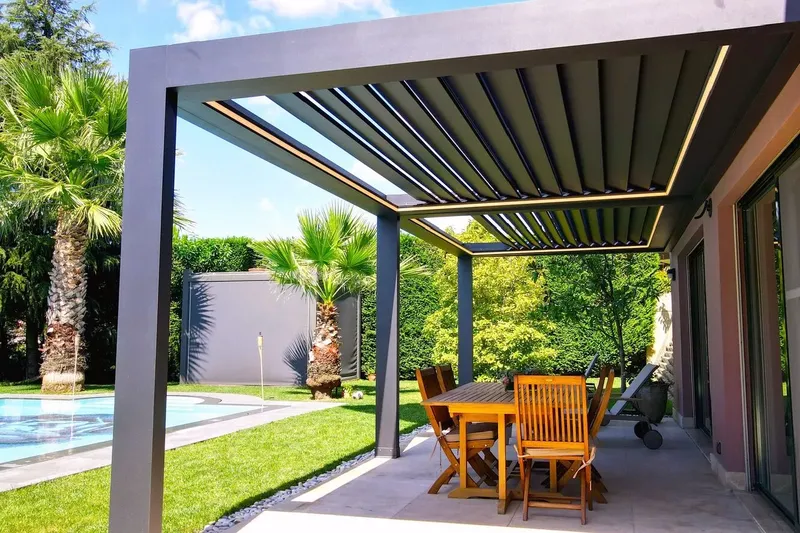
A plain-English comparison of louvre roofs, pergolas and fixed patio roofs for Wollongong, Shellharbour and Kiama homes, covering weather control, cost, and which suits your outdoor space.
If you are planning to cover an outdoor area at your Illawarra home, you have probably come across three terms that get used almost interchangeably, louvre roof, pergola and patio. They are not the same thing, and the difference matters, because it changes how much weather protection you get, how much the space costs, and how often you will actually use it through a Wollongong winter or a wet Kiama summer. This guide breaks down what each one is, the pros and cons, and how to work out which suits your home, your block and your budget.
First, the quick definitions, because the words get muddled. A pergola is an open framework structure, traditionally with rafters or open slats overhead and no solid roof. It gives you filtered shade and a sense of enclosure, but it does not keep the rain off. A patio, in the way most people use the word here, refers to a paved outdoor area, usually with a fixed roof over it, whether that is solid sheeting, insulated panels or polycarbonate. A fixed patio roof keeps sun and rain off permanently, but it is set at one level of cover, you cannot change it. A louvre roof, also called an opening roof or louvred roof, sits somewhere better than both. It uses aluminium blades on a rotating spindle that you open, angle or fully close, either by hand crank or motor. Open, it behaves like a pergola and lets breeze and light through. Closed, it seals like a solid patio roof and channels rain away through built-in guttering. One structure, adjustable to the weather.
Why the difference matters so much in the Illawarra. Our weather does not sit still. A clear Wollongong morning can turn into an afternoon southerly buster, and rain rolls in off the escarpment and coast with little warning. A traditional pergola looks lovely on a still, sunny day, but the moment it rains you are packing up the barbecue and heading inside. A fixed patio roof solves the rain problem, but now you have permanent shade even on a mild winter day when you would happily welcome the sun. A louvre roof is the only one of the three that lets you respond to the actual weather in real time, open for the sea breeze on a humid evening, angled to soften harsh midday sun on a west-facing home, closed tight when a shower blows through from Kiama. For a coastline where the weather changes hour to hour, that flexibility is the whole point.
The pergola: pros and cons. On the upside, a pergola is the most affordable of the three, it is visually light and airy, it suits period and cottage-style homes, and it is a great support structure for climbing plants or a retractable shade. On the downside, it offers no rain protection and only partial shade, so its usefulness drops away sharply the moment the weather turns. In practice, many Illawarra homeowners who start with a pergola end up adding blinds, a shade sail or eventually an opening roof to make the space usable year-round. A pergola is a good choice if your budget is tight, your aspect is already fairly shaded, and you mainly want to define an outdoor zone rather than weatherproof it.
The fixed patio roof: pros and cons. A solid or insulated patio roof is a step up in weather protection, it keeps rain and sun off reliably, it is generally cheaper than a louvre roof, and insulated panel versions cut heat and noise well. The trade-off is that it is permanent, you get one fixed level of cover forever. That means constant shade, which can leave the adjacent rooms of the house darker, and no option to let winter sun in when you want it. A fixed patio roof suits homeowners who want dependable, low-cost cover and are happy with a permanently shaded outdoor room, particularly on an aspect where you never really want direct sun anyway.
The louvre roof: pros and cons. The louvre roof gives you the best of both worlds, full weather control from open to closed, breeze and light when you want it, rain protection when you need it, and add-ons like rain sensors, LED lighting, heating, fans and side screens that turn it into a genuine year-round room. It also tends to add the most resale appeal of the three. The trade-off is cost, it is the most expensive option upfront, and a motorised system with a rain sensor sits higher again. A louvre roof suits homeowners who want to maximise how often they use the space, value the flexibility, and see the outdoor area as a real extension of the home rather than a fair-weather add-on.
A rough cost comparison. Prices vary with size, site and finish, so treat these as indicative Illawarra ranges rather than quotes. A pergola is the cheapest, often a few thousand dollars for a simple open timber or aluminium frame. A fixed patio roof typically sits in the mid range, more than a bare pergola but less than an opening roof, depending on span and panel type. A louvre roof is the premium option, generally running around $800 to $2,000 per square metre installed, which for a typical residential alfresco usually lands the total somewhere between $10,000 and $30,000, with manual systems at the lower end and fully motorised builds with sensors and add-ons at the top. You are paying more for the louvre roof, but you are buying adjustability and year-round use that the other two cannot match. Our separate louvre roof cost guide breaks those numbers down in detail.
So which should you choose? Ask yourself three questions. How often do you want to use the space, and in what weather? If the answer is only on nice days, a pergola may be enough, if it is all year regardless of weather, a louvre roof earns its cost. What is your aspect? A permanently shaded spot may be fine with a fixed roof, while a sunny north or west-facing area benefits hugely from being able to open and angle the blades. And what is your budget, now and later? If you love the idea of a louvre roof but the budget is tight, it can be worth building the structure to suit motorisation and screens down the track rather than committing to a fixed roof you cannot change.
One more thing worth checking before you decide, council approval. Many pergola, patio and opening roof structures can qualify as exempt development in NSW, meaning no development application is needed, provided they fall within set limits on floor area, height and setbacks. Those limits vary between Wollongong, Shellharbour and Kiama councils and depend on your specific lot, so it is always worth confirming before you settle on a design. We cover the approval side in detail in our Illawarra council approval guide.
Still not sure which suits your home? That is exactly what a free, on-site measure and quote is for. As a local Illawarra installer working across Wollongong, Shellharbour and Kiama, IWF can look at your aspect, your existing structure and how you want to use the space, then walk you through pergola, fixed roof and louvre roof options side by side, with real numbers for your block. There is no obligation, and it is the quickest way to turn all of the above into a clear decision for your home.
Frequently asked questions. Is a louvre roof just an expensive pergola? Not quite, a pergola has a fixed open frame with no weather sealing, while a louvre roof has moving aluminium blades that close and drain rainwater away, so it does a job a pergola simply cannot. Can I convert my existing pergola into a louvre roof? Often the existing posts and footings can be reused if they are sound and correctly positioned, which can reduce cost, but this needs assessing on site for structure and wind rating before anyone can promise it. Which option adds the most value to my home? A louvre roof generally adds the most resale appeal because it creates a flexible, year-round outdoor room, though any quality, well-built cover adds to a home's outdoor living value. Do any of these need council approval in the Illawarra? Possibly, many qualify as exempt development within set limits, but this depends on your council, lot and design, so always confirm your specific situation first, and see our council approval guide for detail. What is the best choice for a coastal, wind-exposed block? A louvre roof with correct coastal-grade materials and wind rating tends to handle exposed Illawarra sites best because you can close it against wind-driven rain, but the key on any exposed block is proper engineering and corrosion-resistant fixings, which we specify on site.