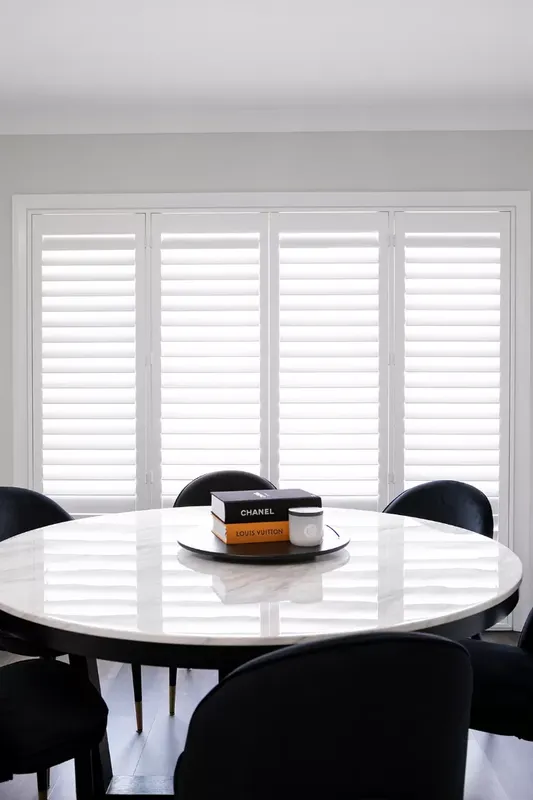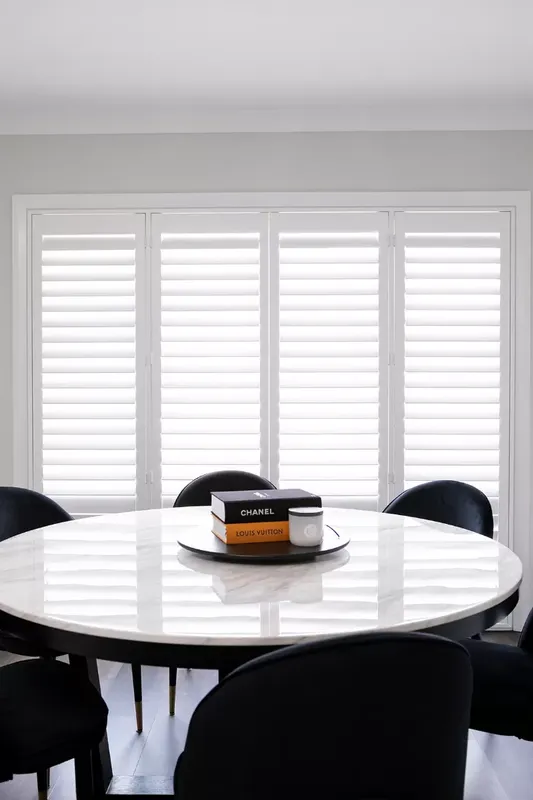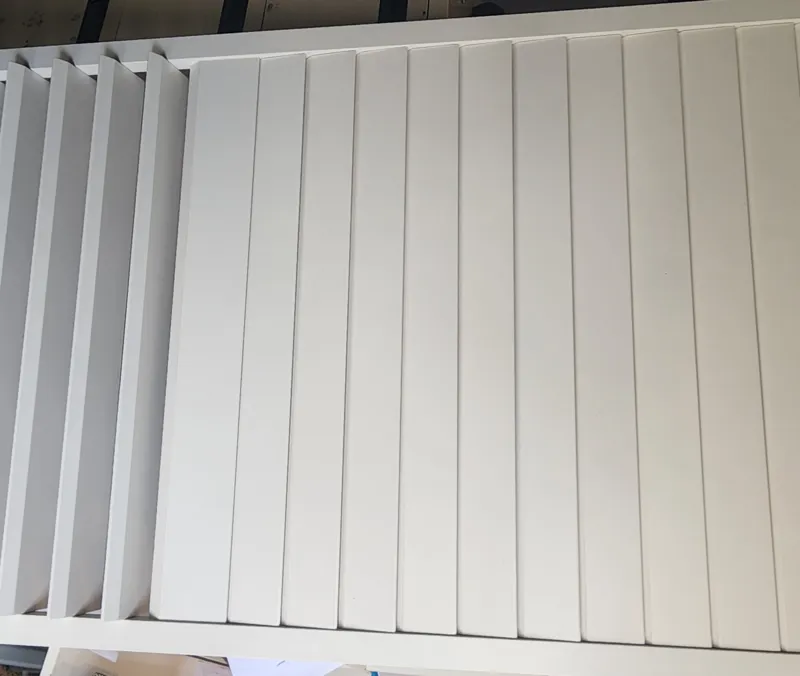
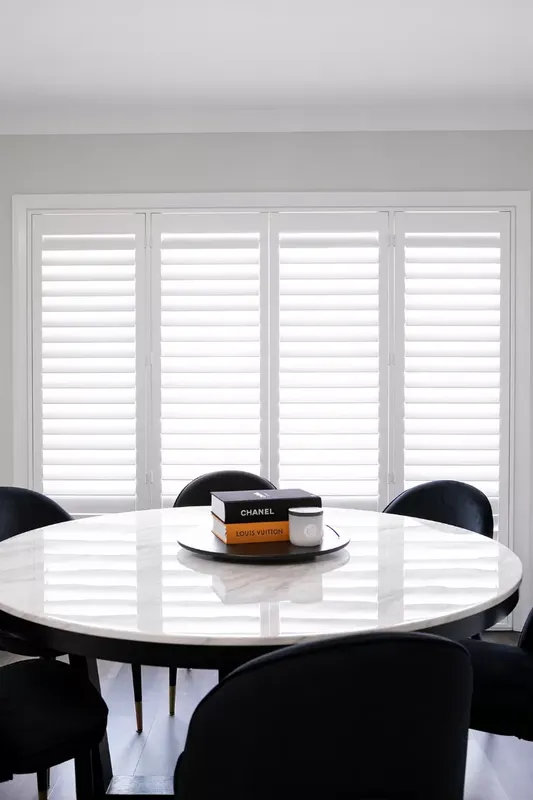
Compare different plantation shutter materials to find the perfect match for your home and lifestyle.
Choosing a plantation shutter material is not simply a matter of picking the finish that looks best in a sample. The material affects weight, moisture tolerance, insulation, blade span, hinge loading, cleaning requirements and how confidently the shutters will cope with the conditions around an Illawarra home. A bright, salt-exposed coastal room has different needs from a dry living room in the foothills, and a bathroom or kitchen needs a different answer again.
Basswood: a good choice for large living areas
Basswood is a lightweight timber with a fine, even grain. It is often chosen for bedrooms, living rooms and other dry areas where a natural painted or stained finish matters. Its relatively low weight makes it practical for larger panels and wider louvres, because the frame and hinges are not carrying as much mass as they would with a denser timber or a heavy composite. That matters on tall windows, bi-fold openings and broad sets of shutters that need to open smoothly every day.
The feel of timber is one of basswood's strongest advantages. It can be painted in a carefully matched colour or finished to show a warm grain, and small variations in the timber make the result feel like part of the joinery rather than a generic covering. Basswood also provides useful insulation and helps soften glare while the louvres are tilted. It is not a waterproof product, however. It should be specified for rooms with normal indoor humidity and kept away from repeated splash, condensation and standing water.
Large spans need particular care. A wide shutter panel can become difficult to operate if it is over-loaded with an unsuitable material, or if the frame has not been designed around the opening. A proper measure should check the height, width, sill condition, reveal depth, handle position and the direction in which the panel will open. Dividing an opening into well-balanced panels is usually more important than simply choosing the widest possible louvre.
PVC and polymer: the practical wet-area option
PVC and polymer shutters are usually the safer choice for bathrooms, laundries, kitchens and rooms where the window regularly encounters condensation. They do not absorb moisture in the same way as untreated timber, so they are less likely to swell, stain or develop movement when the room is ventilated poorly or a sink, bath or shower is close to the window. Their smooth finish is also straightforward to wipe clean.
Polymer is not a single specification. Some products are hollow or reinforced, some use a solid composite construction, and some combine a polymer skin with internal strengthening. That construction affects weight, rigidity and the maximum practical panel size. A good design still needs a suitable frame, adequate hinge support and sensible panel divisions. Moisture resistance does not remove the need for accurate installation or ordinary care.
In a kitchen, polymer shutters are useful above a work surface because cooking vapour and occasional splashes are easier to manage. In a bathroom, they suit windows near a bath or shower where a timber covering would demand more caution. They are also a sensible option for coastal homes where regular cleaning of salt residue is part of maintaining the room. The trade-off is that a polymer finish has a different visual character from real timber, and a very large panel may feel heavier in operation.
Aluminium: for demanding exposure and outdoor openings
Aluminium shutters are chosen when durability, corrosion resistance and a low-maintenance finish are more important than a traditional timber look. They can be appropriate for enclosed balconies, high-wind elevations, sunrooms and selected outdoor or semi-outdoor openings. In a coastal Illawarra setting, the specification should include a suitable powder-coated finish, corrosion-resistant hardware and a cleaning routine that removes salt before it accumulates.
Aluminium is strong for its weight and remains stable when temperature and humidity change. That makes it useful where a shutter needs to cover a broad opening or where the window is exposed to strong afternoon sun. It is not automatically the right answer for every coastal window: the frame design, drainage, fasteners and installation method all contribute to the life of the system. The installer should discuss the actual exposure rather than treating “coastal” as a single condition.
The visual trade-off is clear. Aluminium can deliver a crisp, architectural appearance and a durable colour finish, but it does not have the grain and softness of timber. It can also transmit temperature more readily than an insulated internal covering. For an indoor bedroom, basswood or polymer may feel more appropriate; for an exposed balcony or a high-maintenance-free brief, aluminium may be the better compromise.
Comparing the trade-offs honestly
Cost should be considered alongside the conditions the shutters must tolerate. A lower initial cost is not useful if a material is put in a damp room and needs early replacement, while a premium material can be unnecessary in a dry room that would have suited a lighter option. Ask what is included in the quotation: the frame, hinges, hardware, panel divisions, installation, removal of an existing covering and any special access requirements.
Weight affects everyday use. Basswood is often comfortable on large internal panels. Polymer can be heavier but gives confidence in wet areas. Aluminium can cover demanding openings, but its frame and hardware still need to be sized for the span. Moisture tolerance is strongest with polymer and suitable aluminium systems; timber needs a controlled indoor environment and prompt attention to leaks or persistent condensation. Warping risk is reduced when the material is correctly matched to the room and installed with room for normal movement.
For a coastal Illawarra home, start with the room rather than the product brochure. Basswood is a strong candidate for dry living rooms and large internal spans. PVC or polymer is the practical case for bathrooms and kitchens. Aluminium deserves consideration on salt-exposed western elevations, balconies and semi-outdoor openings where a stable, washable finish matters. A local measure can then confirm whether the opening, frame depth and panel size suit that choice.
Questions to ask before ordering
Ask how the material is reinforced, how the hinges are supported, what cleaning is recommended and what conditions are excluded from the warranty. Ask to see a full-size sample or an installed example rather than judging a small colour chip alone. Confirm the louvre size, frame profile and panel split, particularly where furniture, handles or a sliding door will affect access.
It is also worth discussing future maintenance. Coastal salt should be rinsed or wiped away according to the manufacturer's advice, bathroom ventilation should be kept effective, and moving hardware should not be allowed to carry dirt. The best plantation shutter is the one that suits the room, the opening and the way the household lives in it. A careful material decision at the measure stage prevents most of the expensive compromises later.