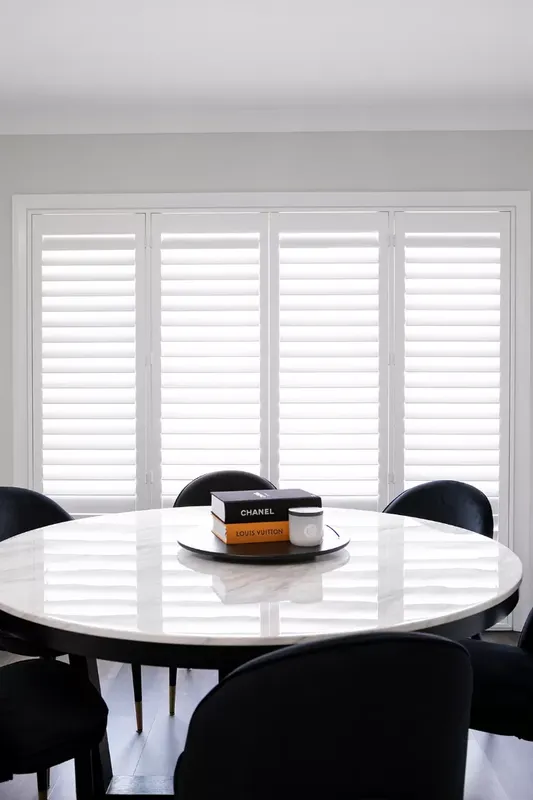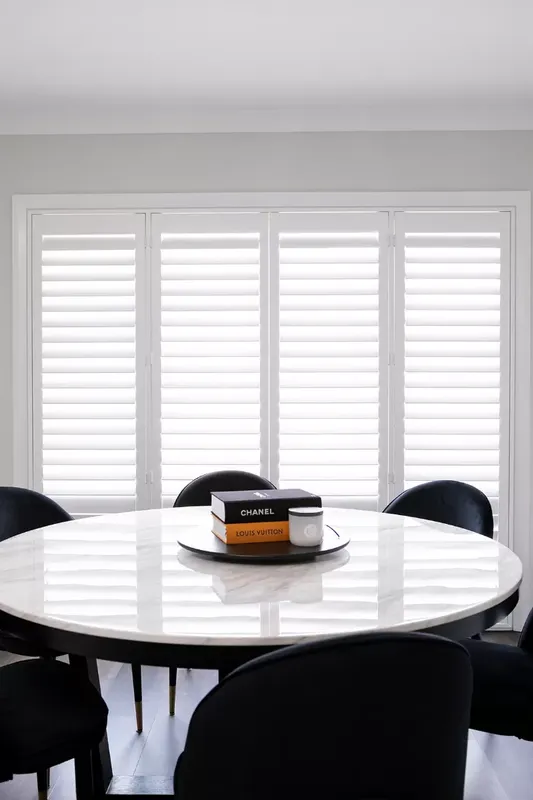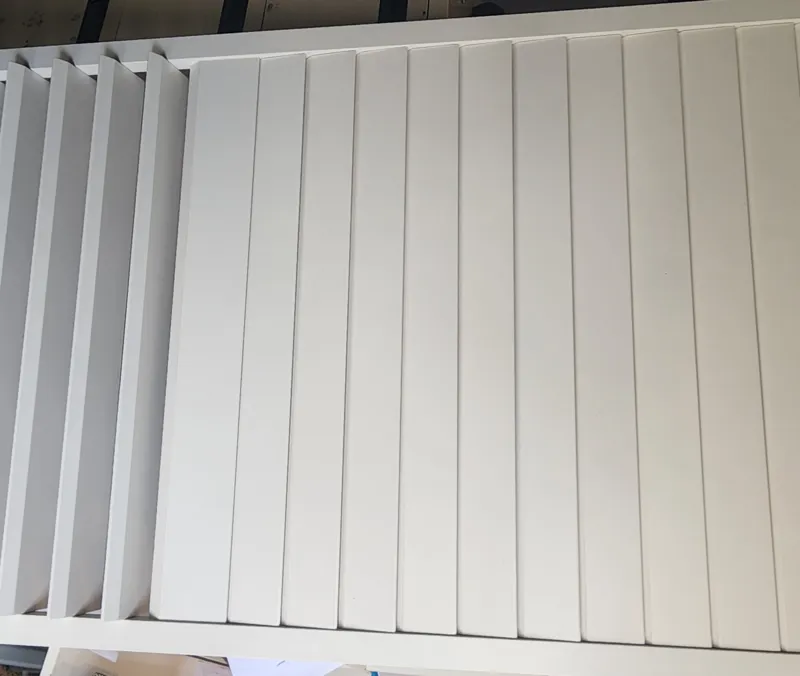
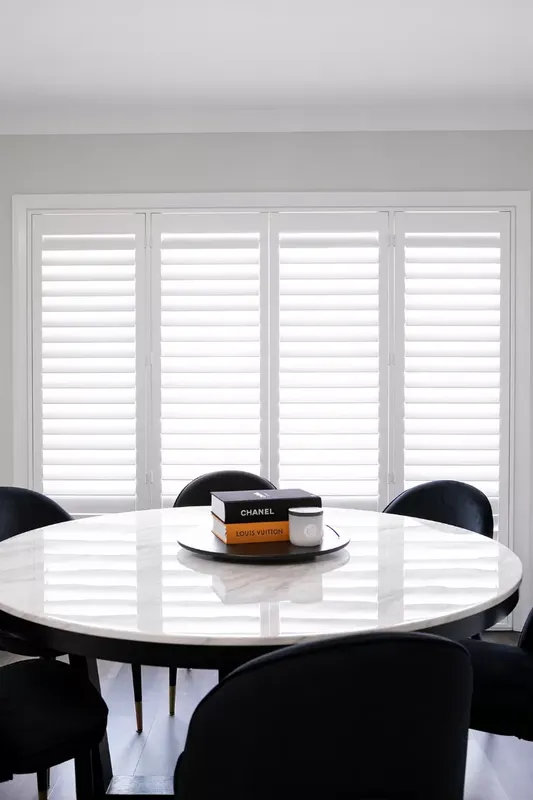
Explore the pros and cons of wood and polymer plantation shutters to make the right choice for your home.
Wood and polymer plantation shutters can look similar from across a room, but they behave differently in daily use. The right comparison is not “which material is best?” in the abstract. It is which material is best for this opening, this room and this level of exposure. In the Illawarra, that means considering coastal humidity, salt air, strong western sun, bathroom condensation, kitchen steam, panel size and how often the shutters will be opened.
Where timber makes sense
Timber, commonly basswood in plantation shutter ranges, is valued for its light weight, fine grain and warm finish. It is a natural fit for dry bedrooms, studies, dining rooms and living areas where the shutters are part of the interior joinery. Because it is relatively light, timber can be comfortable on tall windows and larger panel sets when the frame and hinge layout are designed correctly.
The appearance is the main reason many homeowners choose it. Paint can be matched to skirting boards and walls, while a stained finish can keep the character of the grain. Timber also has a softer, quieter feel as the louvres move. These qualities make it particularly effective in a Federation, cottage or carefully detailed contemporary interior.
Timber needs a stable indoor environment. Repeated wetting, persistent condensation or a leak can lead to swelling, finish damage or movement. That does not make timber fragile in normal use; it means the material should be kept in the rooms it suits. In a dry living area, ordinary dusting and a lightly damp cloth are usually preferable to aggressive cleaning or excess water.
Where polymer makes sense
PVC and polymer shutters are designed for a more forgiving relationship with moisture. They are a practical choice for bathrooms, laundries and kitchens, particularly when the window is close to a shower, bath, sink or cooking area. A smooth polymer surface is easy to wipe down, and the material does not respond to everyday humidity in the same way as timber.
Polymer is also useful where a household wants a robust, low-maintenance finish. It can handle regular cleaning and is less demanding when the room is not perfectly dry. The important qualification is that different polymer products have different internal construction. A reinforced shutter can be better suited to a broad panel than a lightweight hollow product, so panel width, louvre size and hinge support still need to be checked.
The trade-off is weight and appearance. A polymer panel may feel heavier than a timber panel of the same size, and some products have a more uniform finish rather than the natural variation of timber. That is usually a worthwhile compromise in a wet room, but it is not a reason to specify polymer everywhere.
Aluminium and other coastal considerations
For some Illawarra homes, the comparison should include aluminium. It can be useful on a salt-exposed western elevation, enclosed balcony or semi-outdoor opening where stability and a washable powder-coated finish are priorities. The specification should cover the coating, fasteners, hardware and cleaning routine. Aluminium is not an automatic substitute for an internal timber or polymer shutter; it is a material for a more demanding exposure.
Salt air is only one part of the brief. Strong afternoon sun can heat a window and fade an unsuitable finish, while escarpment wind can place extra pressure on a large panel when it is open. The installer should ask where the opening faces, whether it is sheltered, how close it is to the sea and whether rain can reach the shutter. These details determine whether a conventional internal shutter, a more moisture-tolerant material or a purpose-designed outdoor system is appropriate.
Cost, weight and long-term value
There is no honest single price answer without measuring the opening and selecting the construction. A quotation should make the specification visible: material, frame, louvre size, panel count, hinges, handles, installation and any access or removal work. Comparing only a headline figure can hide a change in panel construction or hardware.
Weight affects more than installation. Heavy panels can be tiring on a frequently used door, and an over-wide panel puts extra load on hinges over time. Timber is often attractive for a large internal span because its low weight makes the panel easier to operate. Polymer may be the better choice for a bathroom even if it adds weight, because moisture tolerance is more important there. Where a panel is especially large, a sensible split and a strong frame are more valuable than forcing one uninterrupted panel.
Warping is usually a material-and-environment issue rather than a simple product label. Timber can move if it is exposed to repeated moisture or uneven heat. Polymer reduces that concern in wet rooms, though its construction and reinforcement still matter. Aluminium is stable but needs appropriate coastal hardware and finish. The best value comes from matching the material to the room so that normal cleaning and ventilation are enough to keep it performing.
Room-by-room recommendations
For a bedroom or dry living room, basswood is often the balanced option: light, refined and comfortable to operate. For a kitchen, polymer is worth serious consideration around sinks, splashbacks and steam, while timber can still work on a well-ventilated opening away from direct moisture. For a bathroom or laundry, polymer is usually the straightforward choice. For a salt-exposed western window, discuss aluminium or a suitably finished polymer system after the exposure has been assessed.
For a large opening, begin with the span and operation rather than the material name. Measure the clear opening, the available stacking space, the sill and any handles. Then decide whether the shutters should divide into two or more panels. For a coastal apartment or balcony, consider whether the shutter is truly internal, whether wind can reach it and whether the body corporate has finish or fixing requirements.
Making the decision
Choose timber when the opening is dry and the finish, light weight and joinery feel are important. Choose polymer when moisture tolerance, easy cleaning and everyday resilience matter most. Include aluminium when the opening faces a demanding coastal or semi-outdoor environment and a stable coated finish is appropriate. None of these materials replaces a proper measure: the frame, hardware and installation are part of the result.
A consultation should leave you with a clear explanation of why the recommended material belongs in that room, what its limitations are and how it should be maintained. That honest comparison is more useful than a universal “best” answer, and it is the safest way to choose plantation shutters for a home that has to live with Illawarra sun, humidity and salt air.