
Plantation Shutters Kiama
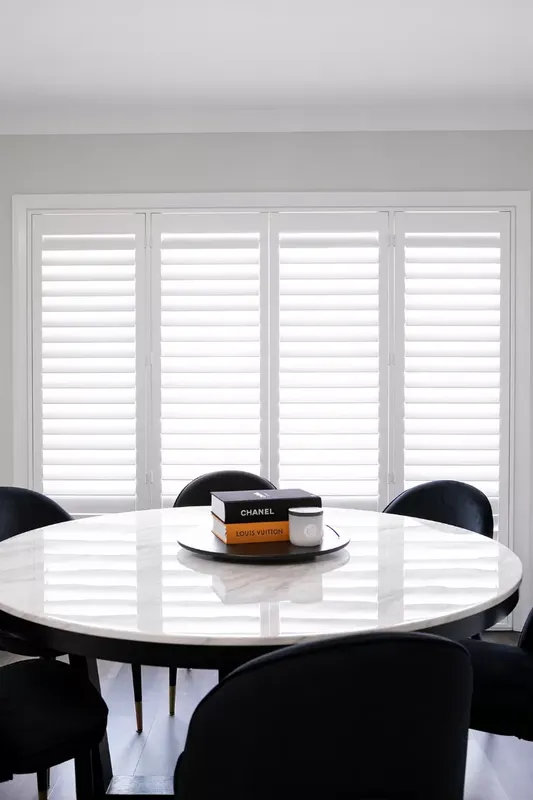
Kiama is one of the more exposed coastal parts of the region, with onshore wind and salt air shaping how a window treatment needs to perform. At the same time, the local area includes Victorian and Federation homes near the harbour, elevated ocean-facing communities and the cooler, sheltered Jamberoo valley. Plantation shutters can be planned for each of those settings, but the right approach begins with the exact opening, its aspect and the level of coastal exposure.
This page looks at the geography and housing patterns that make Kiama different from nearby areas. For broader product styles, material options and configurations, visit our Plantation Shutters product page.
Plantation shutters at a glance
Plantation shutters use adjustable louvres in fitted panels, allowing light and privacy to be changed through the day. They can be configured for traditional sash windows, larger contemporary glazing and room-specific conditions, with the material selected according to moisture, salt exposure and the desired finish.
Coast, harbour and valley: planning for Kiama homes
Heritage-scale windows near the harbour
Kiama town centre includes Victorian and Federation housing near the harbour and Blowhole, where the original proportions of a window can be a central part of the home's character. Tall, narrow openings often benefit from blade widths and panel divisions that respect that scale. Where a property is within a heritage conservation area, it is sensible to check the relevant planning controls before selecting an external look or making a visible change.
Open ocean exposure
Kiama Downs and Minnamurra are coastal, while Gerringong and Werri Beach sit elevated and ocean-facing. These locations can experience stronger onshore wind and a heavier salt load than inland homes. That does not make every room the same: a sheltered bedroom may have different needs from a bathroom, balcony-adjacent window or a living area that receives regular sea air and direct sunlight.
A protected inland contrast
Jamberoo sits inland in a rural valley, where conditions are generally cooler and more sheltered and salt is less of a concern. A dry living room there may make a timber finish worth considering, while an exposed coastal house may call for more attention to moisture-tolerant materials. This contrast is a reminder that the right shutter choice should follow the local conditions at the window rather than rely on a single regional rule.
Glare without losing the outlook
Ocean-facing glazing can bring valuable light and a view, but also direct glare at particular times of day. Adjustable louvres can be angled to soften a bright aspect while still allowing light into the room. The final effect depends on where people sit, the direction of the window and how much privacy or view is wanted, so a layout should be assessed within the room rather than from the street.
Material choice for salt air and sun aspect
In Kiama, material choice needs to account for strong onshore conditions as well as the window's sun aspect. The coastal strip can have a heavier salt load, while a sheltered inland room may have a different balance of ventilation, moisture and heat. It is reasonable for one home to use different materials in different rooms.
Timber in protected rooms
Basswood can provide a warm interior finish for dry bedrooms and living areas. It is best evaluated alongside ventilation and the degree of coastal exposure, rather than assumed to be suitable for every room in a beachside house.
Polymer or PVC in wet areas
For kitchens, laundries, bathrooms and many exposed coastal homes, a polymer or PVC option can be practical because it is moisture-tolerant and easy to clean. It is a useful material to compare where humidity and regular residue matter.
Aluminium for robust exposure
Aluminium can be considered for openings with particularly demanding weather exposure or an outdoor-adjacent role. The opening, frame condition and intended use should all be reviewed before choosing a shutter configuration.
Working with period and contemporary windows
A period cottage can have original sash windows, later additions and rooms with completely different proportions. A modern coastal build may instead have broad sliders, stacked panels or corner glazing. In either case, panel placement should preserve practical access to latches, tracks and screens. Treating every opening as an identical rectangle can make the finished shutters harder to use than they need to be.
Consider the room at different times of day. A morning kitchen, a west-facing lounge and an upstairs bedroom can each need a different combination of light, privacy and ventilation. Small decisions around blade width, frame depth and panel operation are easier to make when the window, furniture and daily routine are considered together.
Care for an exposed coastal setting
Regular, gentle care helps keep shutters operating cleanly in homes that are exposed to salt air. Dusting the louvres and wiping the selected material with a soft damp cloth where appropriate can remove everyday residue before it builds up around hinges and moving panels. A bathroom, kitchen or window that is opened toward the sea may need attention more often than a sheltered inland bedroom. Harsh abrasives and excess water should be avoided; the care method should follow the material that has been chosen.
It is also sensible to think through the openings that need to remain available for fresh air. Flyscreens, sash movement, security screens and sliding-door tracks can all affect how a shutter panel should be placed. Capturing those details at the final measure lets the design support the way the house is used day to day, whether it is a harbour cottage, an elevated ocean-facing home or a property further inland at Jamberoo.
From measure to installation
- Free measure and quote. Review the opening, orientation, room use and whether salt, wind or glare is affecting the space.
- Design discussion. Compare material, blade width, panel arrangement and operation against the home's window style and exposure.
- Final check. Confirm the reveal, handles, flyscreens, sliding tracks and the practical access needed after installation.
- Manufacture and fitting. The agreed design is made to specification and fitted, with timing confirmed for the individual order.
Kiama plantation shutter FAQs
For a home with regular salt exposure, wind and humidity, a moisture-tolerant polymer or PVC option is often practical for internal wet areas. Aluminium may be worth discussing for particularly exposed or outdoor-adjacent openings. The best choice depends on the individual room and exposure.
They can. Homes in heritage conservation areas may have planning controls that affect visible changes. It is sensible to check the applicable requirements before choosing an external appearance or changing an element that contributes to a period streetscape.
A sheltered inland location can make timber a reasonable option for dry living areas and bedrooms, provided the room is not persistently damp. The decision should still consider the window aspect, ventilation and the finish you want.
Internal shutters are not an external wind barrier, but their material and fitting should suit the opening and local exposure. For an especially exposed window, the frame condition, window operation and whether the shutters are internal or external-adjacent should be assessed before choosing a configuration.
Tall, narrow windows often benefit from panel proportions and louvre widths that respect the original scale of the opening. The best arrangement depends on the reveal, sash movement and whether the window is one of several different styles in the house.
Angled louvres can reduce direct glare while still allowing light into the room. The degree of view retained depends on the louvre position, window orientation and where people sit in the space.
They often need a layout planned around the door track, handle clearance and how people move through the opening. A final measure should confirm whether hinged, sliding or bi-fold panels make the most sense for the particular door.
Other window furnishing options
Different rooms and openings can call for a different treatment. Explore other options available for Kiama homes.
Ready to Transform Your Windows?
Contact us today for a free consultation and quote on your custom window furnishing project.
Call Darren: 0411 397 100