
Zip Screens in Kiama
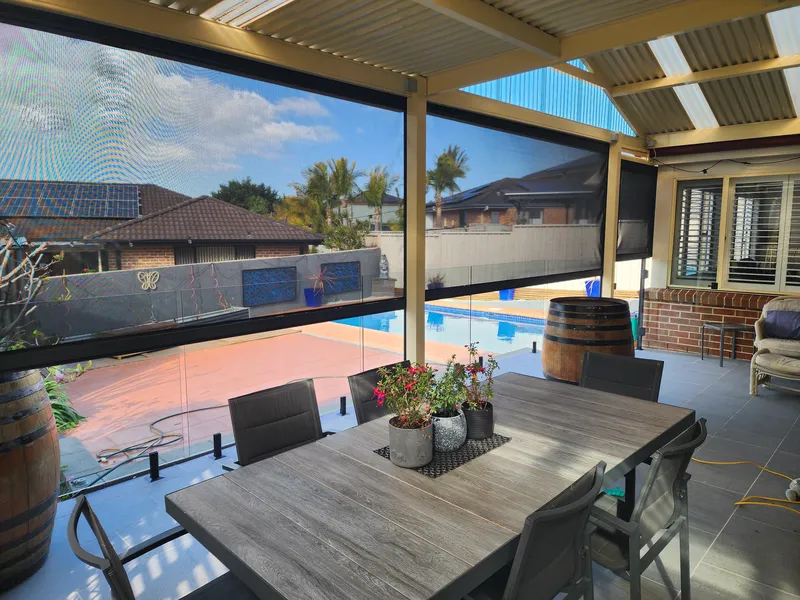
For Kiama zip screens, wind rating is the entire conversation. A screen on a deck above Gerroa or at Kiama Heights must be assessed for the southerly conditions it may receive, while a rain-facing deck in central Kiama has a different priority. Track quality, fixings, fabric openness and the safe operating position all matter more than simply choosing a clear view. Jamberoo, Foxground and Rose Valley are the contrast: the screen may be there mainly to keep rain and insects out of a cooler valley outdoor room rather than to withstand a headland gust.
Start with the wind exposure
A zip screen is more controlled than a free-hanging outdoor blind, but its tracks and fabric still carry wind load. At Kiama Heights, Bombo, Gerroa and the Werri escarpment, the system should be selected against the actual opening, fixing structure and wind guidance available for that product. A screen should be raised when conditions exceed the safe limit. We explain that limit clearly instead of implying that a zipped edge makes an outdoor room storm-proof.
View and openness at Gerroa
Gerroa homes above Seven Mile Beach and other elevated coastal positions often want glare reduction without losing the ocean outlook. Fabric openness controls that compromise. A more open mesh preserves a stronger view and lets more breeze pass through; a tighter mesh reduces brightness and provides more daytime privacy. The best percentage depends on the direction of the glazing and where people sit. We bring samples to the opening so the decision is made from the deck, not from a catalogue photograph.
Kiama Heights and salt-resistant details
A coastal screen needs tracks, fasteners and finish that can be maintained in salt air. Kiama Heights and exposed Bombo positions deserve particular attention to the track material, joining points and the routine for rinsing residue. A screen can still fail early if grit is allowed to sit in the channel or if a bracket is fixed into an unsuitable substrate. The measure includes the wall, post or beam, head height and bottom seal so the system is supported from the start.
Rain on a southerly-facing deck
A zip screen can make a southerly-facing deck more useful when rain protection is the priority, provided the screen is designed with the opening, fall and adjacent drainage in mind. Clear PVC or a more closed fabric can preserve shelter while a mesh may be preferable where airflow is the main need. Water should not be directed into the house or trapped against the slab. We check door thresholds, downpipes and the path of runoff before confirming the layout.
Jamberoo's rain and insect brief
Jamberoo, Foxground and Rose Valley are cooler, damper and more sheltered than the coast. The outdoor room may need a screen to keep rain off a table, reduce insects and hold a comfortable edge around a farmhouse or valley home. Maximum headland wind rating is not automatically the most useful specification. We still check weather exposure and fixing strength, but fabric openness, condensation, drainage and easy cleaning may have greater day-to-day value.
Track layout and operation
The screen's side channels need clear vertical fixing, a suitable head position and a bottom edge that meets the intended seal without fouling the floor. Doors, posts, lights, heaters and furniture determine whether the screen rolls or retracts in the useful direction. Manual control works on a small reachable opening; motorisation can help with several sides or a high deck. The owner should understand manual override and when to raise the screen before severe weather.
A coastal installation with realistic care
We measure the aspect, wind exposure, salt, rain direction, view, insect concern and the way the deck is occupied. After selecting mesh, clear PVC or another suitable fabric, we confirm the tracks, fixings and drainage. Installation checks plumb channels, even fabric movement and the bottom seal. Ongoing care is simple but important: keep tracks clear, remove salt according to the instructions and do not leave the system down outside its operating conditions.
Use the deck as the test site
Look at the opening from the chair, dining table or doorway that will actually use it. That is where glare, the ocean view, rain line and moving air can be judged together. A sample held at eye level on a Kiama deck gives more useful information than an indoor swatch and helps set the track layout, fabric openness and stop position for the space.
Related advice for Kiama homes
Continue planning your zip screens with these related guides:
Want to explore the full range? View our complete Zip Screens range →
Frequently Asked Questions — Zip Screens in Kiama
Start with the opening's wind exposure and the system's safe operating guidance. Kiama Heights, Bombo, Gerroa and Werri-facing sites may need a stronger specification and a clear plan for retracting before severe weather.
A more open mesh usually preserves more outlook and airflow, while a tighter mesh cuts more glare and adds daytime privacy. The useful openness depends on the aspect and where people sit, so compare samples from the deck.
Exposed coastal tracks and fixings should be selected with salt-air maintenance in mind. The joining points, substrate, finish and cleaning routine matter alongside the fabric, particularly at Kiama Heights and Bombo.
It can improve rain shelter when the fabric, tracks, bottom seal and drainage are designed for the opening. Clearances, door thresholds and runoff must be checked so water is not directed into the home.
Jamberoo is more sheltered than the exposed coast, so rain, insects, condensation, drainage and easy cleaning may be more important. The screen still needs a suitable wind and fixing assessment for its exact position.
Other Popular Products in Kiama
Plantation Shutters
Learn more about our plantation shutters options for Kiama homes
Roller Blinds
Learn more about our roller blinds options for Kiama homes
Venetian Blinds
Learn more about our venetian blinds options for Kiama homes
Awnings
Learn more about our awnings options for Kiama homes
Roller Shutters
Learn more about our roller shutters options for Kiama homes
Awnings
Learn more about our awnings options for Kiama homes
Zip Screens
Learn more about our zip screens options for Kiama homes
Ready to Transform Your Windows?
Contact us today for a free consultation and quote on your custom window furnishing project.
Call Darren: 0411 397 100